
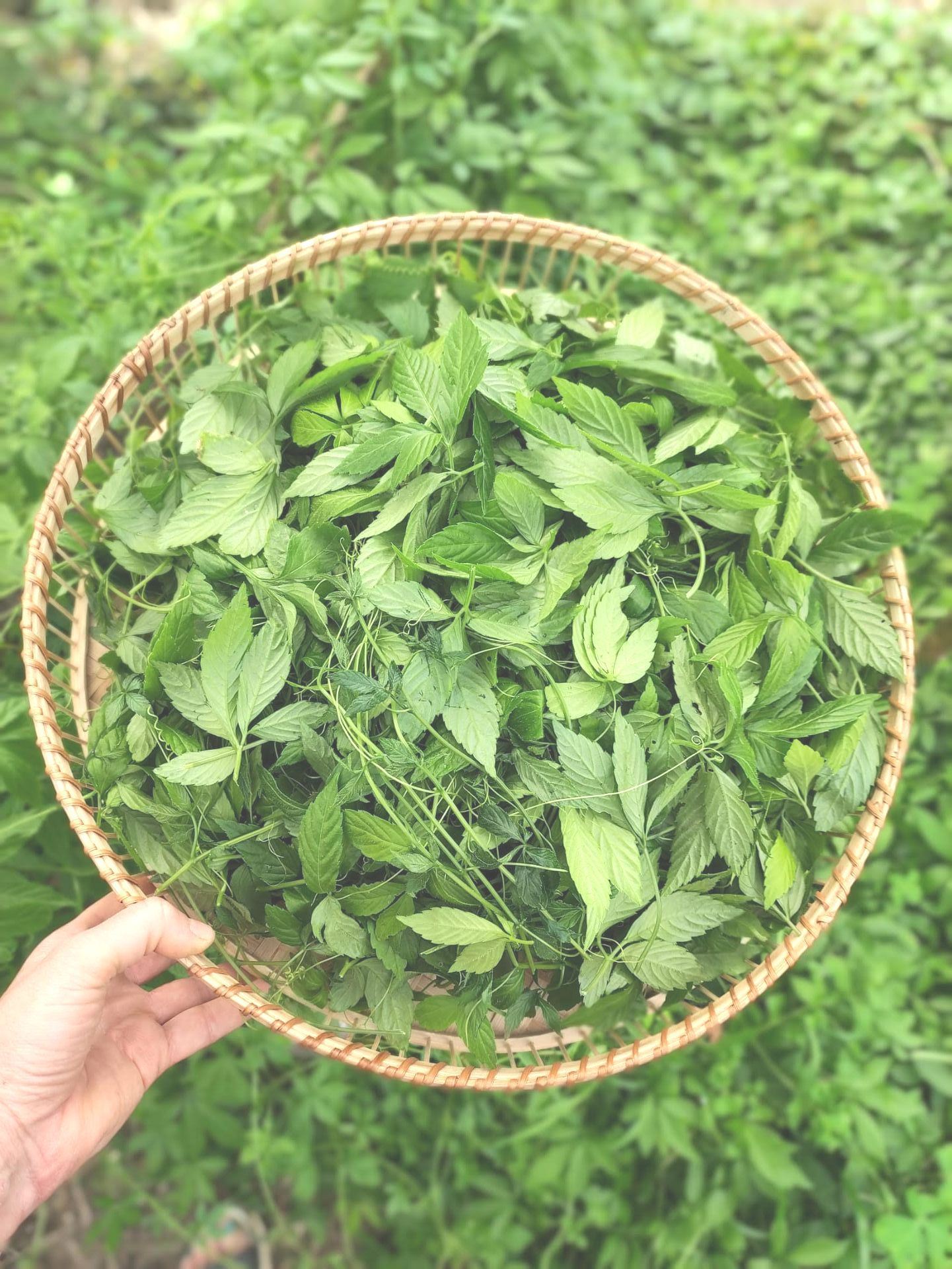
History of its traditional use
Jiaogulan (Gynostemma pentaphyllum) is native to China and other parts of Asia, used for centuries for medicinal and culinary purposes, going back to the Tang dynasty (618-907). In 1972, a Chinese botanist discovered that inhabitants of a remote village in Guizhou province, where jiaogulan was traditionally drunk as an infusion, had a higher life expectancy - hence its other name, the "herb of immortality".
Health benefits
Jiaogulan is an adaptogen containing triterpenoid saponins, the main source of its medicinal properties:
- Immune system support and protection against infections
- Stress reduction: regulation of cortisol production
- Heart health: helps lower cholesterol and blood pressure
- Digestion: stimulates gastric juices
Similarities with ginseng?
Both plants contain similar compounds: triterpenoid saponins called ginsenosides in ginseng and gypenosides in jiaogulan. The proportions and types differ, and jiaogulan also contains flavonoids and polysaccharides not found in ginseng.
Growing jiaogulan locally
Jiaogulan is a climbing perennial of the cucurbit family, like cucumber and squash. We discovered it about ten years ago as the "herb of immortality" in a garden centre. We bought it, potted it, multiplied it, gave it away, then planted it in our greenhouse where it thrives, disappearing in late autumn and reappearing at the end of winter.
We nibble a leaf whenever we pass by, add it to salads and herbal teas - the leaves taste like a pleasant mix of cucumber and ginseng. In short: we adopted it! When we created Adaptitude, it was obvious it belonged in our range of locally grown adaptogens, like ashwagandha and tulsi. One of our organic partner growers now cultivates jiaogulan in northern Finistère!